
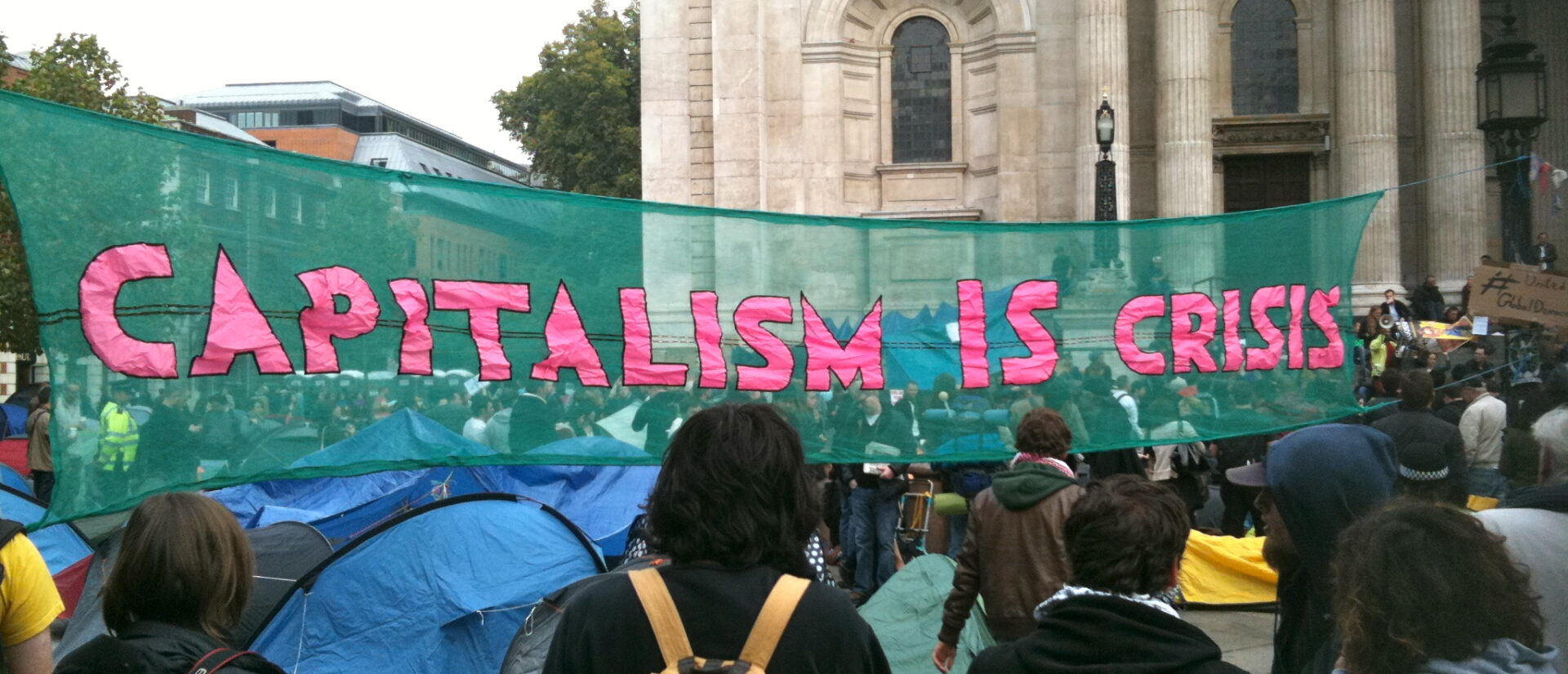
If we want radical change, we need to prepare better and work differently


Seizing opportunities for fundamental change requires being well prepared, both substantively and politically. For those of us seeking radical transformation of the global economy, too many opportunities to advance this goal have slipped through our fingers. We know what we want, but often, we have not worked out the details sufficiently to be convincing or mobilised sufficient, broad-based support. Critically, we fail to confront the real and serious difficulties that must be overcome to achieve radical change, and to communicate effectively about how these challenges can be managed.
This is not to say civil society and academics working on economic change have not had a positive impact. But we must look at the hard reality: it is too little, too piecemeal, and the current system has been able to cope, even thrive, despite our best efforts. The facts are stark: wealth inequality growing so egregiously that we will have individual trillionaires within a decade(opens in new window) ; the world overshooting 1.5 degrees(opens in new window) of warming; the role of social media giants in fueling racism, hate crimes(opens in new window) and the rise of fascist ideologies(opens in new window) ; ongoing sale of arms to Israel(opens in new window) , as genocide and enforced starvation are livestreamed.…..all of this must compel us to change what we have been doing.
But change what, exactly?
This article sets out some key considerations, based on work being developed by SOMO and The Future Economy Incubator(opens in new window) , a new initiative focused on making radical economic change a reality. It is part of several collaborative efforts by our organisation to explore the gap between what we want and how we get there.
Talking about what we are talking about: capitalism!
When we say radical economic change, we mean change to the dominant global economic system. That system is capitalism. Challenging capitalism directly – as opposed to trying to contain its more egregious impacts – has, at least in the Global North, been dismissed by many as the naïve fantasy of fringe actors whose grasp of reality is questionable. Meanwhile, capitalism itself has successfully been framed as meaning freedom and democracy, efficiency and logical use of resources. This is storytelling so powerful that all evidence to the contrary is simply ignored.
If we are to have any hope of achieving a new economic paradigm, one that serves society and nature in all their diversity, we need to be clear that we are working to end, or rather, transcend capitalism. We need to stop thinking it can be controlled or made consistent with the goals of justice and equality. The trajectory of capitalism is inexorably towards the concentration of wealth and power. It may be temporarily restrained, but it has, historically, taken world wars to do so. The long-term course of capitalism is clear: growth, always. At all costs. And the costs are huge.
Learning from our past losses
There have been multiple opportunities to advance a progressive economic agenda over the past two decades. Some come in the form of a sudden change in context. The 2008 financial crisis was one such opening. But too many economic justice advocates spent too much time explaining what went wrong and not enough on harnessing the moment to put forward well-developed proposals for major change. In the years since the crisis, the world’s richest people have gotten richer, and wealth inequality has increased dramatically(opens in new window) . Research suggests that some of the policy responses of governments to the crisis actually favoured this outcome(opens in new window) .
While the financial crisis was a key moment of opportunity, there have been many others, and the openings to advance radical economic change keep coming. The recent success of Zohran Mamdani(opens in new window) in the Democratic mayoral primaries in New York is an example. Mamdani is running on a platform that includes rent freezes, free buses, universal childcare, a $30 minimum hourly wage and city-run supermarkets – all paid for with higher taxes on the top 1% of earners, including corporations. Or the July 2025 announcement of a new political party in the UK, led by Jeremy Corbyn and Zarah Sultana, whose opening statement makes clear that the problems we face are due to “an economic system that protects the interests of corporations and billionaires(opens in new window) .” Or Barbados President Mia Mottley’s consistent, eloquent confronting of the global financial system and economic injustice.
Do we, as actors in civil society, do enough to support such change agents to punch through to a new economic paradigm? The authors would conclude that, while acknowledging some important exceptions, we do not.
Too much of our time and energy remains focused on describing the problems of the economic system. Yes, we call for change, but often our calls are for incremental tweaks to the system, an approach that can actually serve to reinforce it (and make us, at times, part of the problem). Much of the work on the regulation of companies, for example, has tended to accept the existence of massive multinationals and merely try to deal with their impacts on society. Too little work seeks to limit or remove their power. Or we make strong calls for meaningful change, but do not work out, in sufficient depth, how to get there. It is almost as if we accept that our ideas are not going to happen, so why spend time on the details? Again, there are important exceptions. Just not enough of them.
How do we deal with the fallout of radical change?
The change we seek will not come without deep thinking and clear proposals that are credible and accessible to a wide range of actors. It is critical for us to acknowledge that meaningful change will hurt. Capitalism has wrapped its tentacles so completely around us all that any efforts to cut free will hurt millions, possibly billions, of people.
Substantial parts of the economies of whole countries, from Ireland to Mauritius, have been built on attracting foreign investment. The livelihoods and pensions of people around the world are tied up in the ‘maximising shareholder value’ business model. COVID-19 provided stark evidence of what happens when there is an unexpected reduction in global consumption: the multinational retail companies acted to protect themselves and their shareholders, while the poorest workers in global supply chains(opens in new window) went unpaid and lost jobs. Unless there are strong safety nets and a clear plan, changing the pattern of consumption – a core goal of most economic change advocates – will harm a lot of people.
We will not succeed in birthing a new economic paradigm by debunking myths (of which there are many) whilst ignoring realities. If a country loses its big investors, that country will suffer. Not just through the loss of investment, but because it may see its credit rating reduced, struggle to borrow, and have depleted foreign exchange funds to pay for vital imports or to service debt. Countries take these risks seriously, for good as well as erroneous reasons. Consider Ireland: tech giant Apple is one of a handful of big foreign investors on which the country depends. When the European Commission told Apple it owed Ireland €13 billion in tax(opens in new window) , Ireland tried, desperately, to stop Apple having to pay. Why would any country do this? It is not simply a case of corporate capture of the state. Ireland fears the loss of investment because so many jobs would be lost, and there is nothing to replace them, at least not within the current system. How do we address this kind of dependency on Foreign Direct Investments, which entraps many other countries like Ireland?
If we can work out the answers, then we can persuade more people to support our agenda. The risks (perceived and real) of overhauling the system are part of what holds back broader public support for change. On one level, many people see that the economic system does not work. But faced with a constant barrage of political messaging about funding shortfalls for social services, and having experienced the reality of recessions and austerity, when people hear that change will be catastrophic for them, that can feel (and be) very real.
Consider one billionaire’s reaction to Mamdani’s policies: hedge-fund manager Bill Ackman(opens in new window) said, “If 100 or so of the highest taxpayers in my industry chose to spend 183 days elsewhere, it could reduce NY state and city tax revenues by ~$5-10 billion or more, and that’s just my industry.” Ackman’s statement – widely covered by the media – underscores just how thin the veil of democracy is when billionaires do not like what the voters choose. The fact that Ackman’s threat may be hard to carry out does not rob it of its potency.
But this is all the more reason to be deeply prepared to show how what we propose can work, and how we can deal with such threats, not just by debunking them, but by disempowering them. Whether or not 100 ultra-wealthy people can or would leave New York is not the issue: no 100 people should be able to hold such economic sway.
In doing the deep thinking and making concrete proposals, we do not need to reinvent the wheel. Good thinking on economic alternatives to the consumer-driven, growth-obsessed capitalist model exists. But a lot of it is not accessible to the broad constituency with whom we need to work to build political momentum for change. Ideas need to be available and socialised, discussed and shaped by those who will fight for them. Which raises another issue to which we must pay attention…
Whose perspectives define new economic thinking?
The work of building strong proposals for change should not be done by some elites in academia or civil society, disconnected from the grassroots social movements that have been at the forefront of the fight for economic justice and against capitalism for decades. Developing deeply worked-out solutions with movements and activists is vital. Elite actors designing grand plans have a bad history for anyone who cares about justice. Either the plans fail because they lack support, or they are imposed via the brutal suppression of opposition.
Grassroots social movements at the frontline of dealing with the fallout of the capitalist model have a profound understanding of how it works in practice. For example, when Indigenous Peoples say ‘no’ to mining on their land, they face a David and Goliath fight – not just with powerful mining interests, but the whole value chain of actors who stand to benefit financially, and with the government and parts of the population of the country their land is in.
Indigenous communities often have very different models for how natural resources should be used and preserved, which are completely contrary to growth-driven, market-based approaches. For example, advocates for a just transition who only focus on promoting safeguards and benefits for Indigenous communities affected by mineral extraction are unfortunately enabling resource extraction on Indigenous lands, within the existing capitalist model, while sidelining Indigenous perspectives on alternative economic approaches. Radical economic change thinking that is done in genuine partnership with Indigenous communities would likely lead to a very different approach.
Economic decolonising and reparations: avoiding piecemeal reform
Another challenge we face is the tendency to work piecemeal. Overwhelmed by the complex and interconnected nature of the global economic system, we end up breaking it down into manageable work areas. However, capitalism is an interlocking system of oppression. It is not a set of separate policy arenas, and what one country does affects others. Nowhere is this clearer than in relation to economic decolonisation.
For many countries in the Global South, neo-colonialism – defined by economic conditions largely subject to external control and manipulation – is the dominant experience. Economic parameters set in motion during colonialism have been replicated and dramatically expanded. The harmful impacts are wide-ranging and well-documented. Capitalism was and continues to be deeply racialised and maintains an unequal exchange and drain of resources and labour from the Global South to the Global North.
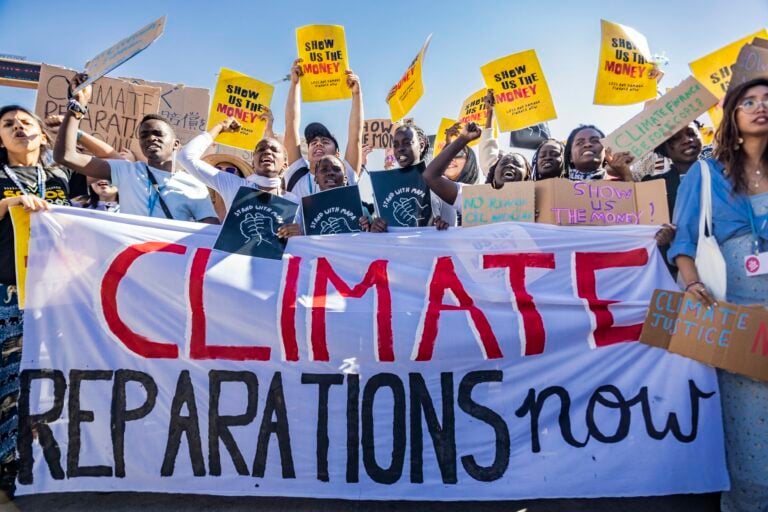
There is no version of a just economic system that does not include economic decolonisation. This means reparations should be central to how we work for a new economic paradigm. Reparations are not only about transfers of wealth to repay what was taken and compensate for atrocities, although this is part of what is required. Reparations mean ending the systems that enable the abuse, and most of these systems are related to capitalism.
This has long been recognised and advocated for by thinkers(opens in new window) and activists(opens in new window) from the Global South. Calls for reparations are, however, rarely given the level of political attention that is needed and are often sacrificed for more ‘pragmatic’ advocacy proposals, which Global North countries are willing to tolerate. We can and must change this, but it requires both well-defined proposals for how these entrenched systems can be changed and a willingness to shift from insider advocacy to a wider and more sustained political mobilisation against powerful opponents who want to maintain the status quo.
Building sustained momentum for change
The system will not change itself. This sounds obvious, but we often work as if we did not see this. Currently, the policy advocacy of many NGOs targets mid- and senior-level policy makers. But, in most countries, these people are in their jobs because they believe the system should be as it is. They will not make big changes, so why are they seen as critical interlocutors?
If we are clear that the system will not change itself, then we will see the importance of building political energy and momentum outside of the system. We will see the potential that exists to connect many different groups whose agendas have long been undermined by capitalism. We will put more focus on working in deep alliances, and less on policy advocacy strategies. This requires breaking silos and shifting from the narrow focus that models of funding have imposed on most civil society and academic organisations. It requires a commitment to solidarity across diverse agendas.
If we are clear that the system will not change itself, we will recognise that putting forward clear proposals for deep systemic change does not mean restricting ourselves to proposals that are politically feasible now. What is important is that the proposed changes are worked out in a credible way. If we wait for big change to be politically feasible, we will repeat the failure of the 2008 crash. We should aim to create proposals, in partnership with social movements, that are ready to be implemented when opportunities appear. Indeed, the very fact that we can set out detailed and defensible pathways to radical economic change can help create political opportunities.
How change happens is complex, messy, and defies theories of change. But it happens. It is seldom driven by those already in power, those holding privilege, those who are comfortable. Nor will it happen if we let people tell us to think small so we are taken seriously. Only when we take ourselves seriously enough to plan as if what we want can happen, and work broadly in solidarity with others, will we have any real chance.
About the authors
Meghna Abraham is an international human rights lawyer who has worked with communities in all regions of the world to challenge the negative impacts of economic policies on their lives. She was formerly the Executive Director of the Center for Economic and Social Rights and the Director of Global Issues at Amnesty International. Meghna is a co-founder of the Future Economy Incubator.
Michelle Meagher is an anti-monopoly lawyer and author of Competition is Killing Us: How Big Business is Harming Our Society and Planet – and What to Do About It, a Financial Times Best Economics Book 2022. Michelle is a co-founder of the Future Economy Incubator.
Audrey Gaughran is the Executive Director at SOMO.
Do you need more information?
-

Audrey Gaughran
Executive Director
Related news
-
-
 Reclaiming wealth for climate, reparations and justicePosted in category:Long read
Audrey GaughranPublished on:
Reclaiming wealth for climate, reparations and justicePosted in category:Long read
Audrey GaughranPublished on: -
Carbon Offsets: the ‘go-to’ industry for big business greenwashing needsPosted in category:Opinion
Audrey GaughranPublished on:
Audrey Gaughran